
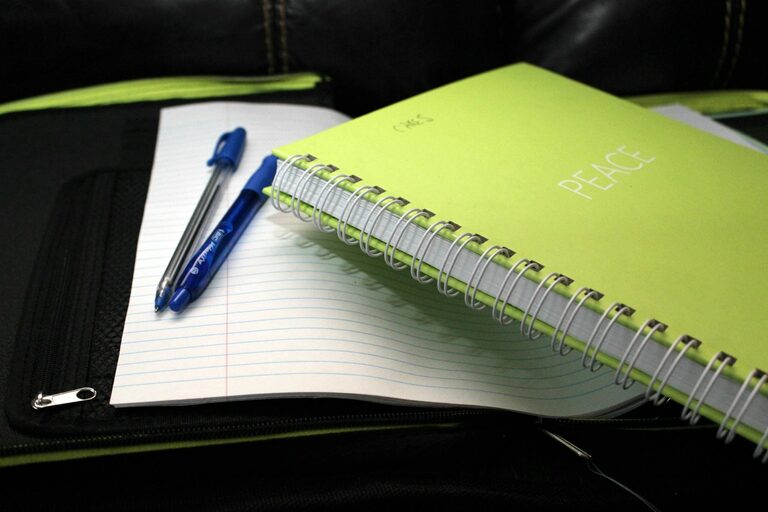
Choosing the right notebook might seem like a simple task, but anyone who’s ever bought a stack of unused notebooks knows it’s easy to end up with something that doesn’t quite fit your needs. Whether you plan to use your notebook for work, school, journaling, or creative ideas, selecting a notebook you’ll actually use and enjoy can boost your productivity and creativity.
In this article, we’ll explore key factors to consider when picking a notebook and how to find the one that truly suits your lifestyle.
Why Choosing the Right Notebook Matters
A notebook is more than just paper bound together. It’s a tool for organizing your thoughts, jotting down to-dos, capturing ideas, or even a creative outlet. Using a notebook that feels right can motivate you to write regularly, helping you build habits around planning and reflection.
On the other hand, a notebook that’s too bulky, too plain, or not suited to your writing style may end up abandoned on a shelf. Choosing one that fits your preferences ensures you get the most out of your investment.
—
Step 1: Identify How You Plan to Use Your Notebook
Before buying, think about the primary purpose of your notebook. Here are some common uses:
– Daily planning and to-do lists
– Meeting notes or class lectures
– Creative writing or journaling
– Sketching and doodling
– Bullet journaling or habit tracking
Each use may require different features, so clarifying your main goal helps narrow down your options.
—
Step 2: Decide on Notebook Size and Portability
Notebooks come in various sizes, each with pros and cons:
– Pocket-sized (around 3.5 x 5.5 inches): Ultra-portable, fits easily in a purse or pocket. Great for jotting quick notes but might feel cramped for detailed writing.
– A5 size (approx. 5.8 x 8.3 inches): A popular mid-size choice, balanced for portability and enough space to write.
– A4 size or larger: Suitable for extensive note-taking or sketching but less convenient to carry around.
Consider your daily routine: If you commute or travel frequently, a smaller notebook might work best. If you mainly write at a desk, a larger notebook can accommodate more content.
—
Step 3: Choose Your Preferred Binding Style
– Spiral-bound notebooks: Lay flat and fold back for easy writing, but the edges can get bent or caught in bags.
– Hardcover or softcover with sewn binding: More durable and elegant, often lay flat but might require more careful handling.
– Disc-bound notebooks: Modular, allowing pages to be added or removed, but may be more expensive.
Each binding style affects durability and usability, so pick one that matches how and where you will use your notebook.
—
Step 4: Select the Paper Type and Ruling
Paper quality can greatly affect your writing experience.
– Paper weight: Heavier paper (measured in gsm, grams per square meter) reduces ink bleed-through and feels more substantial. Typical notebooks are around 70-100 gsm; for fountain pens or markers, 90+ gsm is better.
– Ruling styles: Consider which layout helps you write best:
– Lined: Classic and great for writing or note-taking.
– Grid (graph): Perfect for bullet journaling, diagrams, or precise writing.
– Dot grid: Offers subtle guidance, great for flexible layouts or creativity.
– Blank: Ideal for sketching or freeform notes.
Try to find a notebook with paper and ruling that supports your preferred style of writing or drawing.
—
Step 5: Think About Cover Material and Design
You’ll likely carry your notebook around a lot, so durability matters. Common cover materials include:
– Hardcover: Protects pages better and looks professional but is heavier.
– Softcover or flexible: Lightweight and portable but less protective.
– Leather or faux leather: Offers durability and a premium feel but usually costs more.
– Fabric or cardboard: Can be eco-friendly options but may wear out faster.
Also, consider whether the design inspires you. Some people prefer minimalistic covers, while others like vibrant patterns or motivational quotes. Pick what encourages you to open your notebook regularly.
—
Step 6: Consider Extra Features That Might Help
Some notebooks include features that can enhance your experience:
– Elastic band closures: Keep your notebook securely closed.
– Ribbon bookmarks: Helps you find your place quickly.
– Numbered pages: Useful for indexing.
– Pre-printed templates: Such as calendars, to-do lists, or habit trackers.
– Pen loops or pockets: Convenient for storing writing tools or loose papers.
While extras can be helpful, avoid overloading with features you don’t need—it could cost more or add bulk.
—
Step 7: Test Before You Buy (If Possible)
Whenever you can, try to flip through notebooks before purchasing:
– Feel the paper texture.
– Write a few lines with your favorite pen or pencil.
– Flip through to see if it lays flat easily.
– Check the size against your bag or desk space.
If buying online, look up reviews and check if the seller offers a return option.
—
Final Tips for Using Your Notebook
– Personalize it: Add tabs, stickers, or dividers to make it your own and easier to navigate.
– Set a purpose: Decide what you want your notebook to help you with to keep motivation high.
– Keep it accessible: Store your notebook where you spend most of your writing or thinking time.
– Give it time: Sometimes it takes a few days to get into the habit of using your new notebook. Stick with it!
—
Conclusion
Choosing a notebook you’ll actually use is about matching your style, needs, and lifestyle with practical features. By considering your intended use, preferred size, binding, paper quality, and added features, you’ll find a notebook that invites you to write every day. Remember, the best notebook is the one that feels right in your hands and inspires you to put pen to paper.
Happy writing!
